

The Listing Says “Two-Car Garage.” Will Your Life Fit?
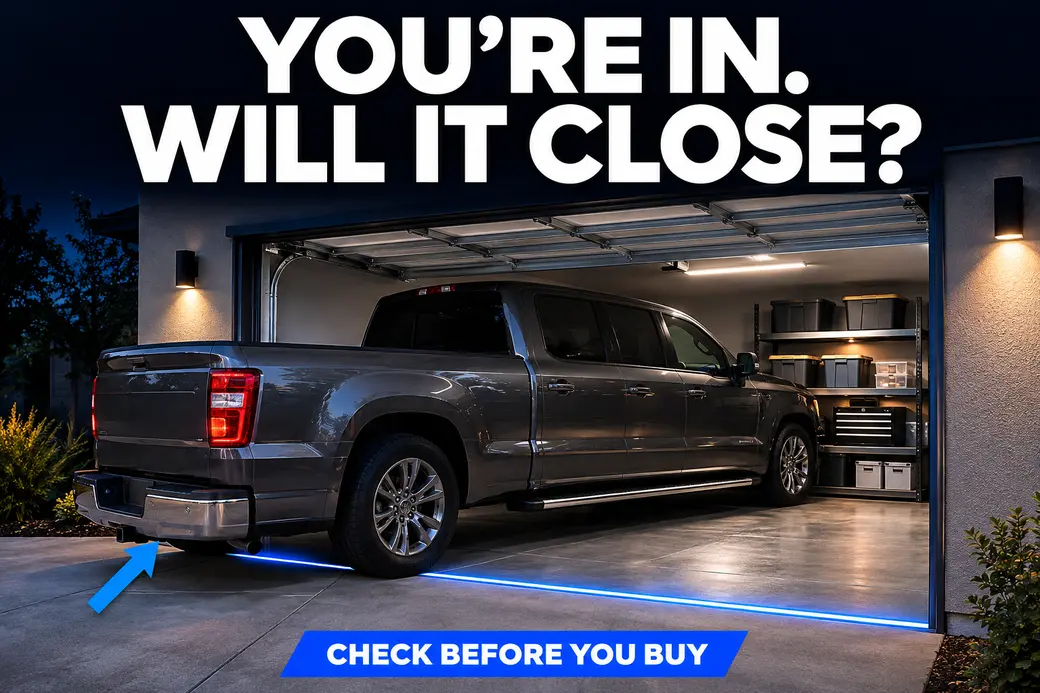
You can pull into the garage. But can you close the garage door?
A long truck or SUV may clear the opening but leave its bumper in the door’s path—especially with storage shelves along the back wall. Before you buy, check the usable depth, not just the “two-car garage” description.
If you are buying along Utah’s Wasatch Front, think about how you would use that space on a cold morning: loading groceries, finding your snow brush, or getting a bike past a parked car. A quick look from the doorway is not much of a test.
Before you fall in love with the kitchen, give the garage a few minutes of its own.
1. Start with your actual vehicles, not the parking count
“Two-car garage” is a useful description. It is not a promise that your particular two vehicles will fit comfortably.
Bring the dimensions of the vehicles you actually drive, including mirrors and any roof rack or other accessories. Then, with permission, measure:
- The clear width and height of the garage-door opening.
- Usable interior depth with the garage door closed.
- The narrowest usable width, including steps, posts, or fixed cabinets.
- Space needed to open vehicle doors and access the trunk or tailgate.
A truck might fit nose to wall but leave no practical route around it. An SUV might clear the opening without a roof-mounted cargo box but not with one.
If the fit is close, request a supervised test park rather than guessing. Never move the seller’s belongings or operate equipment without permission.
2. Count the space that is already spoken for
An empty floor plan does not show everything that will compete for parking space.
Think about your own storage list: bikes, tools, seasonal decorations, sports equipment, bins, or a workbench. Where will those go once the vehicles are inside?
Existing shelves can help, but check whether they are included in the sale rather than assuming they stay. Notice how much room steps and fixed equipment take up, too.
Do not count required equipment clearances or access areas as storage. If you are unsure what must remain clear, ask a qualified professional.
Useful question: Can we park, store what we need, and still walk through without rearranging the garage every day?
3. Walk the route from the car to the house
Now imagine your hands are full.
Can you open the house-entry door with both vehicles parked? Is there room to carry groceries past a bumper? Would the space work with the mobility equipment, stroller, cart, or other items you use?
Along the Wasatch Front, a winter routine may also mean wet boots, a snow shovel, and items you want within easy reach. Decide where those would go without blocking the route inside.
This is not about finding a flawless garage. It is about noticing a daily inconvenience before it becomes yours.
4. Check the backup parking plan
If one vehicle will live outside, look beyond the garage.
Would parking in the driveway block the sidewalk? How does the driveway’s slope feel for your needs? Where would visitors park without blocking access?
Do not assume that street parking or overnight guest parking is always available. Check the property’s current city rules and any applicable HOA documents, including winter parking restrictions. Rules vary; a quiet street during a showing is not proof that overnight parking is permitted.
Ask for clarification before relying on a parking arrangement that is important to your purchase.
5. Treat “we can add that later” as a question
Want an EV charger, additional outlets, overhead storage, or a different garage door?
Write those ideas down, but do not treat them as guaranteed upgrades. Electrical capacity, installation requirements, structural considerations, permits, and association restrictions may affect what is feasible.
Ask the appropriate licensed or qualified professional to evaluate the work and provide an estimate. An existing outlet alone does not establish that the garage is ready for your intended charging setup.
The same principle applies to condition concerns: this checklist is a space-planning tool, not a substitute for a professional home inspection.
Your five-minute garage check
Before leaving the showing, answer these five questions:
- Do our actual vehicles fit with room to open the doors?
- Where would our everyday storage go?
- Can we move comfortably between the vehicles and the house?
- Is our backup parking plan allowed and practical?
- Which changes need professional evaluation before we count on them?
A garage does not need to be impressive. It needs to work when you get home.
At Utah’s Realty Team, we help buyers look beyond the listing photos and compare how a home fits their everyday needs. If a move is on your radar, let’s build a buyer game plan around the details that matter to you—without pressure to rush.
General information only; not inspection, electrical, engineering, or legal advice. Verify property details and applicable rules with the appropriate professionals and authorities. Equal Housing Opportunity.
Categories
Recent Posts


GET MORE INFORMATION