
Your Neighbor's Asking Price Is Not Your Home's Price Tag
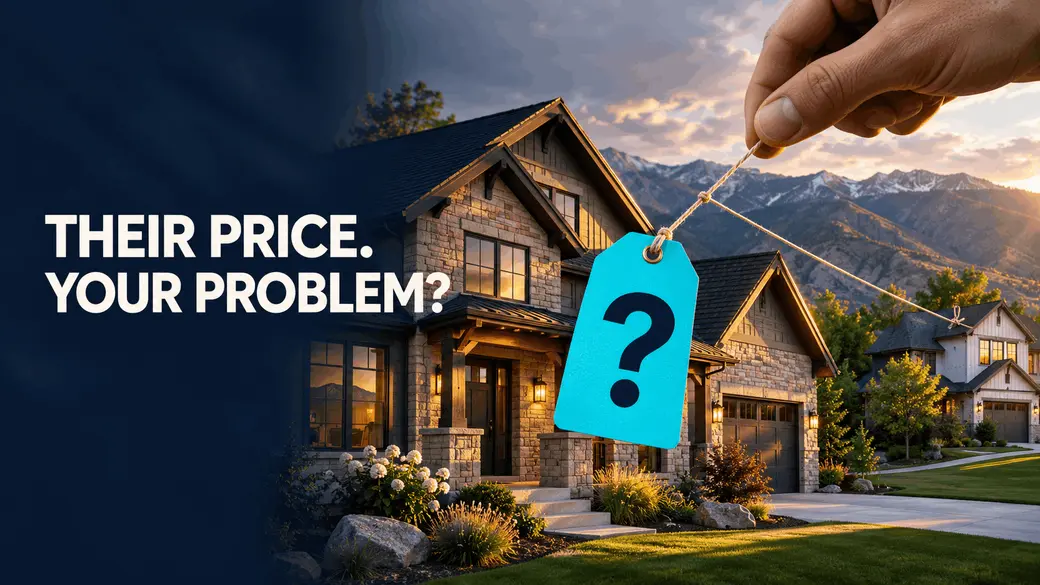
The house down the street just listed for more than you expected.
Naturally, you look around your own kitchen and think, “Well, if they can get that…”
That little word if is doing a lot of work.
A neighbor's listing can be useful information. It is not proof of what a buyer will pay for your home. Before that number becomes the starting point for your own move, it helps to separate a seller's asking price from evidence of a completed sale.
For Utah homeowners considering a sale this winter or planning ahead for spring, here is a calmer way to look at the comparison.
1. Find out which kind of price you are looking at
A home can have several different numbers attached to it. They do not all mean the same thing.
An active listing price tells you what the seller is currently asking. That home may be part of your competition, but its price has not yet been validated by a completed sale.
A pending listing tells you the property is under contract. The advertised price does not necessarily reveal the agreed price, concessions, or whether the transaction will close.
A closed sale price tells you what a completed transaction recorded. It becomes more useful when you also understand the home's condition, timing, and any verified concessions.
An online estimate is another reference point, not a substitute for checking those details.
Before asking, “Why is their home worth more?” ask, “Which number am I actually looking at?”
2. Compare the home, not just the address
Same neighborhood does not automatically mean same comparison.
Along the Wasatch Front, a search can put a rambler with a finished basement beside a two story home with more space above ground. Similar total square footage does not make those spaces interchangeable.
Look beyond the headline numbers:
- How much space is above ground, and how much is in the basement?
- Is the basement finished, and how does it actually function?
- What are the condition and finish levels?
- How do the lot, driveway, garage, and outdoor areas compare?
- Does either property have an HOA, and what obligations come with it?
- Are there differences in road exposure, access, or nearby surroundings?
These are questions to investigate, not a formula for adding a fixed dollar amount to every feature. Two homes can look similar in a search result and offer very different experiences in person.
3. Treat upgrades as details, not automatic credits
You replaced the flooring. Your neighbor did not. Surely you can add the full flooring bill to their price?
Not necessarily.
An improvement may help presentation or appeal without returning its full cost in a sale. Its relevance depends on the work, the rest of the home, and the alternatives buyers can choose.
The reverse matters, too. A dated kitchen does not automatically mean a complete remodel is the best next step.
Before spending, separate work that addresses an actual problem from changes you hope will justify a higher price. Get qualified professionals involved where needed. Then discuss the selling strategy before turning the house into a construction zone.
4. Ask what else a buyer could choose
Your neighbor's house is one data point. A buyer may be considering several.
The useful question is not just, “What is the highest price nearby?” It is, “What other homes would someone compare with ours?”
Depending on the search, that might include a resale in the same area, a different floor plan nearby, or a new construction option. Any builder pricing or incentives need current verification, including their conditions. An advertised incentive is not automatically a better overall deal.
A pricing conversation should consider relevant completed sales alongside today's alternatives. Neither a single ambitious listing nor an old headline can do that job alone.
5. Build the review plan before choosing the number
Your list price should come with a plan for reviewing what happens next.
Before launch, ask your agent:
- Which properties are the strongest comparisons, and why?
- Which facts are verified, and which are still unknown?
- What differences make a comparison less useful?
- When will we review inquiries, showings, feedback, and new competition?
- What evidence would make us reconsider the strategy?
There is no universal number of showings or days that guarantees an offer. But agreeing on the review process now is better than deciding what every quiet afternoon means later.
The bottom line
Your neighbor's asking price can start a conversation. It should not finish it.
Before choosing your own number, check the property's status, compare meaningful details, and look at the options a buyer actually has. The goal is not to win the neighborhood contest for the boldest price tag. It is to make a decision you can explain and a plan you can adjust.
Thinking about selling your Utah home? Utah's Realty Team can help you sort through the comparisons and build a selling game plan around your property and timing. No pressure to list before you are ready.
Explore your next step at Utah's Realty Team.
General information only, not an appraisal or a guarantee of sale price or timing. Property details and market conditions require individual verification. Equal Housing Opportunity.
Recent Posts

GET MORE INFORMATION