

Love the Model Home? 7 Questions to Ask Before Buying New Construction in Utah
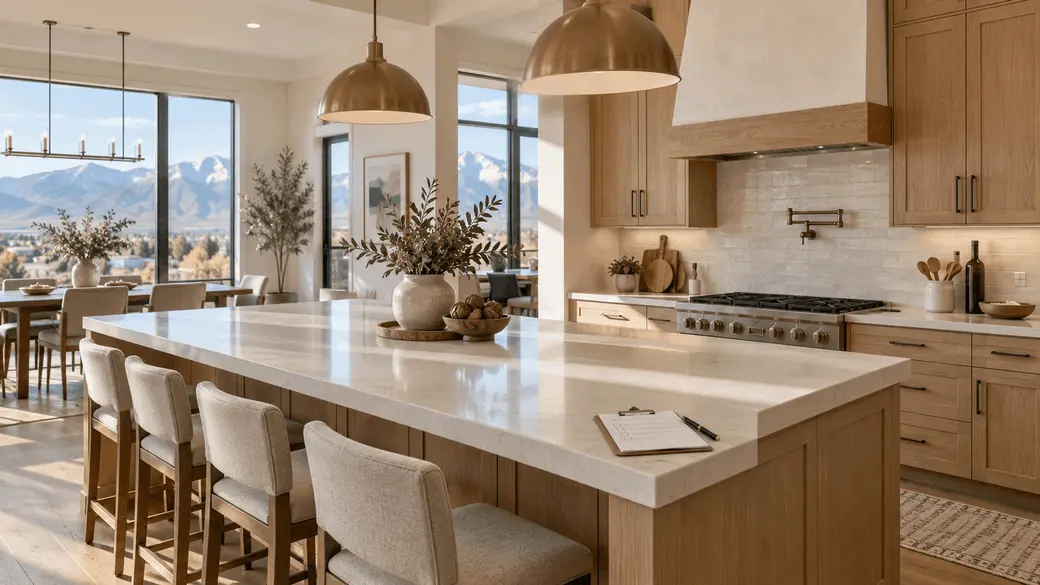
You walk into the model home, see the kitchen, and suddenly your current cabinets have offended you personally.
I get it. The big island, the windows, the pantry with room for an actual Costco run. It’s easy to start picturing your life there.
Before you pick out a spot for the couch, though, ask one question:
“What would this home actually cost with the things I’m looking at?”
That’s where the useful conversation starts. The model can show you a lot of possibilities, but you need to know which ones come with the home you’re considering.
Whether you’re touring in Herriman, Lehi, Eagle Mountain, or somewhere else along the Wasatch Front, here are seven questions I’d put on your list.
1. What actually comes with the house?
That kitchen might be exactly what you want. Just find out whether the cabinets, counters, appliances, and lighting are included in the price you’ve been discussing.
Ask for the written list of included features for your specific floor plan and purchase option. Take it through the model with you. Check the basement, window coverings, garage, patio, fencing, and landscaping, too.
There’s nothing wrong with choosing upgrades. You should simply know when you’re choosing one.
Try asking: “Can you show me what this home looks like at the price we’re talking about?”
That will tell you more than another ten pictures of the kitchen.
2. What’s the price for this home on this lot?
“Starting at” gives you somewhere to begin. It doesn’t give you the whole budget.
Ask for an itemized price showing the home, lot, selected options, and any other charges. If there’s a lot premium, find out what you’re paying for and whether it matters enough to you to justify the cost.
And please spend some time looking at the lot itself. A floor plan won’t tell you how you feel about a steep driveway, an afternoon sun that lands right on the patio, or the amount of yard you’ll be maintaining.
Ask about drainage and what’s planned nearby. Check future development with the city or county rather than assuming that open field will always be an open field.
3. What will I need to buy after I get the keys?
Nobody gets particularly excited about budgeting for blinds. Until they move in and realize the neighbors can see straight into the living room.
Depending on what’s included, you may still need window coverings, appliances, fencing, landscaping, or storage. An unfinished basement might be fine for now. A missing refrigerator probably deserves a sooner spot on the list.
Separate those expenses into three groups:
- Things you need before moving in.
- Things you want to tackle during the first year.
- Things that can comfortably wait.
Get estimates for the bigger projects. “We’ll figure out the yard later” isn’t much of a budget.
Also ask about HOA dues, special assessments or district charges that may apply, and how property taxes are being estimated. Have your lender walk you through the full projected housing payment and what could change.
4. What are the details behind the incentive?
A builder incentive is worth a closer look. So are the conditions attached to it.
If there’s a credit, upgrade package, or financing offer, get the terms in writing and ask:
- Does it apply to the home and lot I want?
- Do I have to use a particular lender or other provider to receive it?
- Is there a deadline to sign or close?
- What can the incentive actually pay for?
- If it lowers the payment, how long does that benefit last?
I wouldn’t choose a loan based on the biggest number on a sign. The Consumer Financial Protection Bureau recommends comparing Loan Estimates from multiple lenders. Ask a licensed lender to help you compare the terms, fees, cash needed at closing, and payments over time.
An incentive may be useful. You want to understand the whole offer before deciding how useful it is for you.
5. When can I realistically move in?
“Almost done” is encouraging. It’s not quite enough information to book the moving truck.
Ask what work remains, which approvals are still needed, and how you’ll hear about schedule changes. Find out which dates are estimates and what the agreement says about delays.
This gets especially important if your lease is ending or you need to sell your current home. Think through what a delay would mean for storage, temporary housing, and your financing timeline.
Before making nonrefundable moving arrangements, confirm the status with the builder and closing team. If the contract language leaves you with questions, have an attorney explain it.
6. How do inspections, walkthroughs, and warranty requests work?
New is exciting. It’s still worth asking how the home will be checked and how concerns will be handled.
Ask about access and permitted timing for an independent inspection. A qualified inspector can explain which stages make sense for the home, and the builder can confirm scheduling requirements and deadlines.
At the final walkthrough, find out how unfinished items will be documented, who is responsible for them, and how you’ll track their completion.
Then get the warranty information in writing. Read what’s covered, what isn’t, and the deadlines for reporting a problem. Save the contact information somewhere you’ll remember.
The question I’d ask is simple: “If something needs attention after we move in, who do we call and what happens next?”
7. Who’s helping me look at the whole purchase?
The builder’s team can explain its homes and process. It’s also important to understand who represents whom and what help you want with your purchase.
Talk with your chosen real estate professional before your first visit or online registration, and ask the builder about its registration process. Representation and compensation terms can vary. Don’t assume they work the same way everywhere.
Then step back from the model long enough to compare your options.
Would a resale home fit your timing better? Could another lot leave more room in the budget for the features you really want? Do you actually need that upgrade, or did it just look great under the model’s lighting?
You don’t have to talk yourself out of a home you love. You do want enough information to feel good about choosing it.
A quick list to take on your next tour
Save these seven questions on your phone:
- What’s included?
- What’s the total price for this home and lot?
- What will I still need to buy after moving in?
- What conditions come with the incentive?
- How firm is the completion date?
- How do inspections, walkthrough items, and warranty requests work?
- Who’s helping me compare the full purchase?
Then go enjoy the tour. Open the pantry. Picture your couch in the living room. Just bring home the answers along with the photos.
Thinking about new construction in Utah?
If you have a floor plan saved on your phone and a few questions you haven’t sorted out, let’s talk.
Our team at Utah’s Realty Team can help you compare new construction with resale options, sort through what matters to you, and get your questions together before you visit builders.
Start with a Utah Buyer Game Plan.
You don’t need to have everything figured out before reaching out. That’s a perfectly good place to start.
Utah’s Realty Team | Real Estate Essentials
General information, not legal, lending, tax, or inspection advice. Confirm property and contract details in writing with the appropriate professionals. Equal Housing Opportunity.
Further reading: CFPB: Choosing a loan offer.
Categories
Recent Posts

![Best Places to Live in Utah (By Budget, Lifestyle & Commute) [2026 Guide]](https://cdn.lofty.com/image/fs/302832941241175/website/47306/cmsbuild/w600_2026331_588efbe7f56248ca-png.webp)





GET MORE INFORMATION